
罗曼蒂克消亡史
“钼”成300层+NAND必选项 机构:沉积设备迎10亿美元增量市场_我的网站

一 |
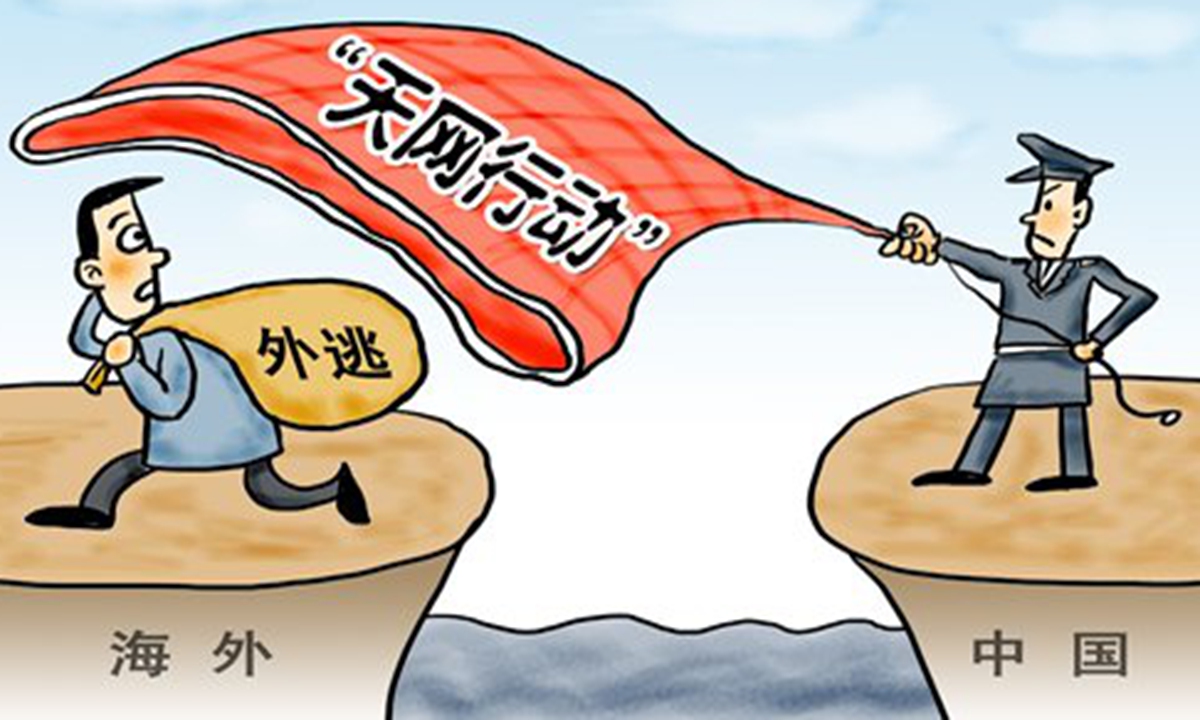
Chinese lawmakers began reviewing a draft law on combating cross-border corruption on Tuesday, a legislation which experts believe would help close legal gaps in investigating overseas corruption, pursuing fugitives and recovering illicit assets, while strengthening international cooperation and corporate compliance.
The draft was submitted for its first reading to the ongoing session of the Standing Committee of the National People's Congress, the country's top legislature, per Xinhua News Agency.
Huo Zhengxin, a professor at the China University of Political Science and Law, told the Global Times that the draft law represents a dedicated piece of legislation within China's anti-corruption legal framework and a major step forward in the country's law-based governance of foreign-related affairs. It will fill a legislative gap in combating cross-border corruption, Huo said.
As Chinese companies expand business overseas, cross-border corruption cases face challenges in obtaining evidence abroad, pursuing fugitives and recovering illicit assets. Existing anti-corruption laws have faced limitations in addressing such cases involving foreign affairs, making such dedicated legislation necessary, Huo said.
Structured into six chapters and 47 articles, the draft sets out the principles, scope and key provisions underpinning China's efforts to combat cross-border corruption. It also defines relevant operational mechanisms and institutional responsibilities, and seeks to strengthen case handling and international cooperation.
The draft further clarifies enterprises' obligations regarding integrity and compliance, and specifies legal liabilities for violations.
As one of the experts involved in drafting the legislation, Huo said a key innovation of the draft is to strengthen international cooperation and corporate integrity and compliance obligations. As evidence, suspects and illicit assets in cross-border corruption cases are often located overseas, the draft provides mechanisms including extradition, mutual legal assistance and repatriation, while aligning with relevant rules under the UN Convention against Corruption (UNCAC), said the expert.
The draft also makes clear that Chinese companies operating overseas, including both state-owned and private enterprises, have legal obligations to uphold integrity and compliance with domestic laws, Huo said.
The legislation would also codify practices accumulated through China's past campaigns against cross-border corruption, such as Sky Net and Fox Hunt operations, turning them into a more systematic legal framework and strengthening the law's deterrent effect, according to Huo.
The draft law is a practical step to regulate the development of cross-border businesses and help build a world-class business environment aligned with market principles, the rule of law and international standards, Xinhua noted.
It is also expected to expand the legal tools available to combat cross-border corruption and help address challenges in detecting corruption, collecting evidence, recovering illicit assets and securing convictions, according to the report.
In January, CCTV News reported on the case of a former senior executive of China National Offshore Oil Corporation, who was accused of accepting large amounts of bribes that were concealed overseas, with a businessman allegedly acting as a "front" to collect the illicit payments.
The draft's explicit corporate integrity and compliance requirements would make it harder for individuals to disguise bribery and other corrupt practices through overseas projects in an attempt to circumvent domestic oversight, while further clarifying the extraterritorial reach of China's anti-corruption laws, Huo said.
The draft also contains provisions to counter the use of foreign countries' domestic anti-corruption laws to exercise "long-arm jurisdiction" over Chinese companies, which Huo described as another important innovation in China's foreign-related legal framework.
China has been deepening its efforts in international anti-corruption cooperation, with 963 corrupt fugitives repatriated to the country in 2025, according to a work report from the country's top anti-graft body, Xinhua reported.
。 当地时间8月23日,半导体行业研究机构SemiAnalysis发文称,NAND闪存制造正从钨转向钼,因为当NAND来到300层以上,钼是必选项。
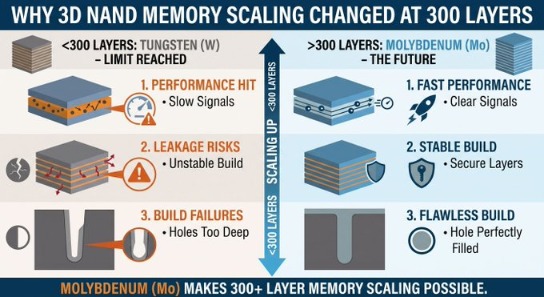 SemiAnalysis分析,3D NAND闪存堆叠层数突破300层后,钨字线在电阻、化学兼容性和深孔填充三方面均触及物理极限,钼成为强制替代材料。三星已于2024年量产,美光2025年跟进,SK海力士计划2026年底推出375层钼工艺产品。其估计,钼在NAND总产能中的占比将从2025年的中个位数百分比,增长至2027年的约30%。
二 | 更进一步的,该机构提出,钼沉积设备将在明年迎来超10亿美元的新增市场。 该机构称,每一次从钨到钼的转换,都意味着需要新的沉积设备。SemiAnalysis估计,仅2027年一年,NAND钼沉积设备的销售额就将超过10亿美元,并随着DRAM和逻辑芯片的跟进,到2030年增长至约20亿美元/年。 受益格局方面,Lam Research(泛林集团)最先获益,TEL(东京电子)紧随其后;AMAT(应用材料)、ASMI(ASM国际)及Naura(北方华创)则更多受益于后续DRAM和逻辑芯片的转型浪潮。SemiAnalysis表示,完整的细分市场层面测算已纳入其前道设备(WFE)模型。 钼渗透率在高层数NAND中提升,本质是为延续NAND单位Bit成本下降曲线。 300层NAND主要在结构上升级,聚焦超高深宽比通道孔刻蚀、多次Stack堆叠、晶圆翘曲控制以及Overlay精度控制。 375层乃至400层以后,材料亟需升级,因钨字线会因为字线间距通道孔缩小面临RC延迟快速恶化、WF残氟导致介质损伤、漏电失效率提升以及填充缺陷放大的问题。而钼凭借更低电阻率、无氟前驱体及无需阻隔层等优势,有望改善RC性能与器件可靠性,为字线和存储孔缩放提供工艺余量,从而延续高层数NAND的成本下降曲线。 中银证券表示,SK海力士已完成375层3D NAND生产验证并计划2026年底量产,拟采用钼材料替代钨制作字线,继三星在286层第九代3D NAND中率先导入钼工艺后,两大存储龙头相继切换,钼替代钨趋势确立。 然而,钼的材料加工更为复杂,因为必须以气体形式输送,且前驱物在室温下为固体,需要加热器以确保流动稳定性。 基于此,300层以上3D NAND字线由钨切换为钼,并不是简单更换靶材或者更换气体材料,而是前驱体供给、ALD沉积腔体、刻蚀、清洗、尾气处理整套工艺链条的重构,原有钨CVD产线硬件无法直接复用,将直接推动晶圆厂资本开支上行,同时设备、特种材料、零部件均迎来变化。 爱建证券表示,钼导入本质是一次全流程工艺重构,设备链受益有望沿“沉积及前驱体输送→CMP及清洗→刻蚀→量检测”路径传导,工艺难点由沉积向后处理环节延伸。其中—— 沉积:成熟的WF钨工艺,Mo沉积需重新建立高深宽比结构下的填充与缺陷控制工艺窗口,同时有望减少阻隔层使用,带动沉积设备及配套工艺升级; 输送:Mo前驱体通常采用低挥发性固态源,与传统WF气态前驱体体系差异较大,需要新增气化装置、温控管路及精密供气系统,以保障前驱体稳定输送; CMP:Mo材料的氧化及表面化学特性不同于传统金属体系,需重新开发CMP研磨液和研磨垫,以满足平坦化、去除速率及缺陷控制要求; 清洗:Mo导入后残留物及氧化物体系发生变化,高深宽比结构下金属残留和污染控制难度提升,有望推动相关湿法清洗设备及配套化学品验证导入; 刻蚀环节则需重新建立适配钼材料的工艺窗口,且3DNAND层数持续提升下,刻蚀选择性、侧壁形貌控制及层间均匀性要求进一步提高,有望带动相关刻蚀设备升级需求; 量检测:Mo量产还需新增膜厚均匀性、填充缺陷、金属残留及电学可靠性等监控项目,有望带动薄膜量测、缺陷检测及电性测试等设备需求增长。 该机构称,NAND工艺迭代核心从单纯堆叠层数转向材料—设备—工艺协同创新,新材料导入将持续催生沉积、刻蚀、清洗等关键设备迭代升级,Mo字线导入将推动沉积、刻蚀、清洗等关键环节工艺升级,相关设备及零部件厂商有望受益。
 (文章来源:科创板日报)。
Current article:http://vy9lr.runtunpaixufenjuduishuang.pics/w6ca8x/i46v.html
Published on:14:23:07
- B'desh will get stuck in China's debt trap like SL & Pak: Media expert
- 76 killed in Nigeria boat capsize
- 山东威达:上半年净利润1.2亿元,同比下降24.19%
- 俄军被曝穿缴获的乌军制服,秘密潜入对方阵地
- 接触10秒即可感染,中疾控连发提醒!
- 圣淘沙发展局公布大圣淘沙岛宏伟愿景 重新定义新加坡人的玩乐、休闲与欢聚方式
- 比特币价格自5月以来首次触及8万美元
- 吉林一地下月连休5天不调休,当地教育局:中小学开学两天就放假
- 吴柳芳一人撑起整个家:母亲患癌症+弟弟小10岁没工作 只能借贷维生
- “蛇年启运,福满家门”——星河幼儿园2025春季学期开工大吉
- UK Prime Minister Liz Truss announces resignation
- 费城一嫌疑人戴“恰吉”面具恐吓、追逐并惊吓居民被起诉
- 两岸影人在北京共话电影合作
- 武汉试点智能捕蚊“黑科技”,20天灭蚊超7万只
- 【“十五五”开局看河北】政策赋能激发活力 工业经济平稳增长
- 小米推出“米家石墨烯暖风机 C”:支持 1200W/2000W 两挡功率切换、10 分钟快速升温,179 元
- 【观点】南华期货:红枣价格暂维持稳中偏弱运行
- 'We Want to Save Lives': How Tory Cabinets Pushed NHS to the Wall, Disregarded Nation's Health
- 5岁女童遭机器人踢中面部4颗牙齿脱落,家属索赔15万遭拒
- 伊朗放出信号:愿与美直接对话